
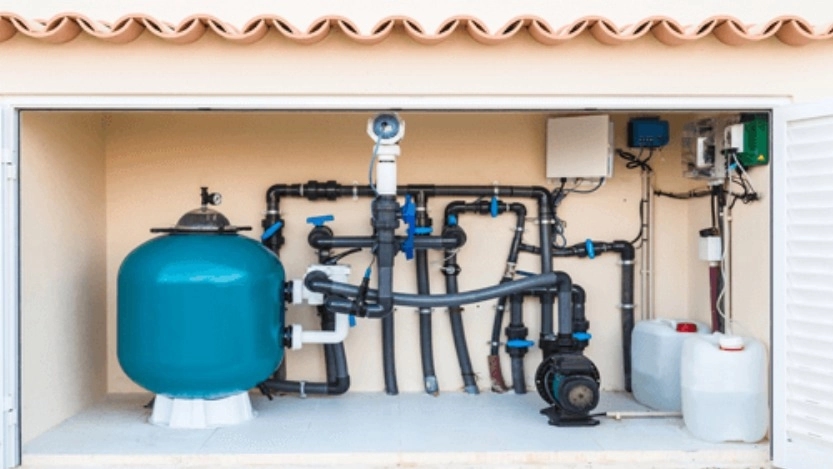
Initial measures for pool plumbing
At first, a series of actions must be taken as a prerequisite before starting the plumbing of the pool:
First, you need to create a suitable platform for the water circulation system and the way of piping to heat and purify the pool water should be designed by experts.
Plan and install separate paths to improve the quality of the incoming water and filter the pool water properly.
Choose the type of pipe according to the conditions (costs, type of use, etc.). Using PVC pipes for water circulation system and resistance to chlorination is the best option. The main material of these pipes is chlorine, so it has high resistance against chlorine and various acids.
Using a strong disinfection and filtration system in swimming pool facilities increases the quality of swimming pool water and ultimately saves water consumption.
You must use suitable and standard covers as insulation to protect the pipes.
In places where it is not really needed, you should avoid twisting the piping system.
The piping route starts from the pump, then to the filters and finally to the heating or chlorine treatment system.
Based on the volume of the pool and the amount of water consumed, you should choose the dimensions and diameter of the pipes.
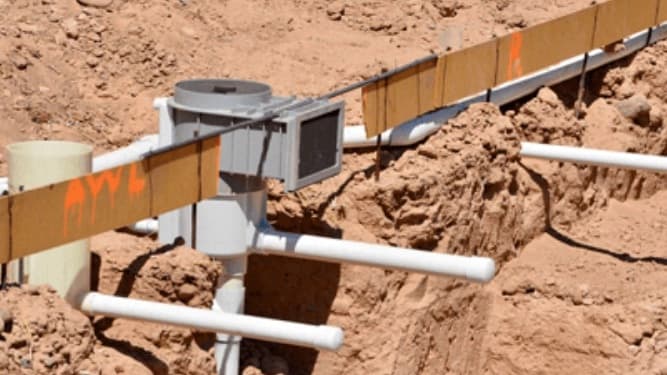
Launching and running the pool plumbing
Step 1: Installing drains and drains before doing anything and before starting the plumbing of the pool, you must use the main and required pool equipment for things like skimmers, drains and water inlets. These parts act as a filter. The soles of the feet move the floating bodies and fats from the swimmers' bodies out of the water surface. The outlet of these pipes is connected to the main sewer pipe and they send extra materials from inside the pool to the outlets to prevent clogging of the pipes. The main drains are usually at the bottom of the pool and remove dirt and debris from the pool.
Step 2: Connecting the couplings You must use a special technique to glue the two pieces. In this way, first use some PVC cleaner at the end of each of the couplings and the places needed for water intake, drain and inlets. Then put some glue on all the parts and finally stick them together. Use this technique and process to connect different pipes in each section. Note: Coupling is a piece used to connect two shafts together.
Step 3: The execution of drainage pipes. Swimming pool piping is dug underground, and this piping process should be done in such a way that there is no need to destroy the ground by creating problems in the piping every time. Now you need to drain the pool and place a 90 degree elbow at the end of the fitting. Use the PVC remover and then glue technique. At the end of the elbow, put a straight pipe and place it towards the parts of the pool where the water is drained.
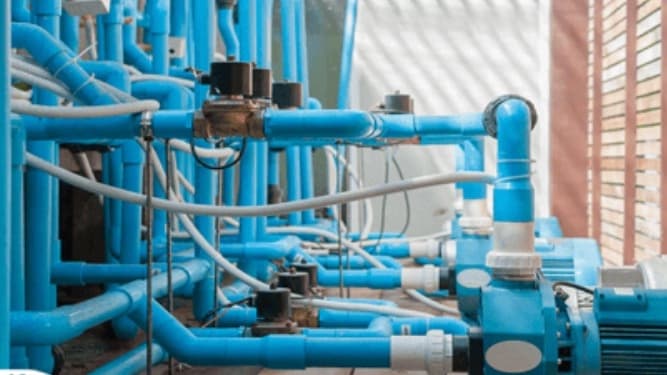
Pool
PVC tube (PVC):
Polyvinyl chloride piping system is the best option for swimming pool piping. The standard thickness of PVC pipe walls for swimming pools is at least 40. Size 80 can also be suitable, but size 20 is too thin and should never be used for swimming pools.
PVC Flex Pipe:
This piping system is one of the most common materials in swimming pool piping. Although its quality is not as high as PVC pipe, but due to its reasonable price, it is the choice of many people who want to save a little on their expenses.
CPVC tube (CPVC):
This type of chlorinated PVC pipe has a light gray color. Its advantage over PVC pipe is high resistance to heat and that it does not melt easily against heat, for this reason it is mostly used for the inlet and outlet parts of pool heaters.
High density polyethylene (HDPE) and low -density polyethylene (LDPE):
Polymer piping systems are still used in some pools by some people and are also seen in many pool installations that were built in the past. This type of pipe has different types that are divided based on color. Black pipes are for non-pressure applications and cannot be used in swimming pools. White colored pipe is suitable for low pressure drainage and therefore not a good choice for swimming pool piping. Red and green pipes are also suitable for use in high pressure, including swimming pools and hot tubs.
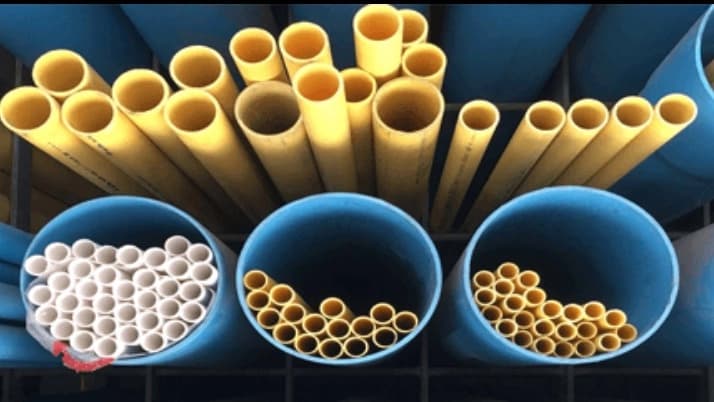
ABS Tube (ABS):
Acrylonitrile butadiene styrene piping system is sometimes used in swimming pool facilities because it is available and abundant, but this type of pipe also has its disadvantages. The length of the slip joint (glue joint) in ABS pipe is much shorter than that of PVC, and ABS is not a suitable piping in a swimming pool, which is a high-pressure, closed-loop system.
Metal pipe:
Piping systems made of copper or galvanized steel have high strength, but due to their disadvantages, they are not suitable for swimming pools and hot tubs. They are heavy, so they are very difficult to transport and install. In addition, over time, they get rusted and sediment accumulates in them. Also, the chlorine in the pool causes the pipes to leak and crack. Therefore, if you are still using metal piping in your pool installation, you need to change your pool piping system.